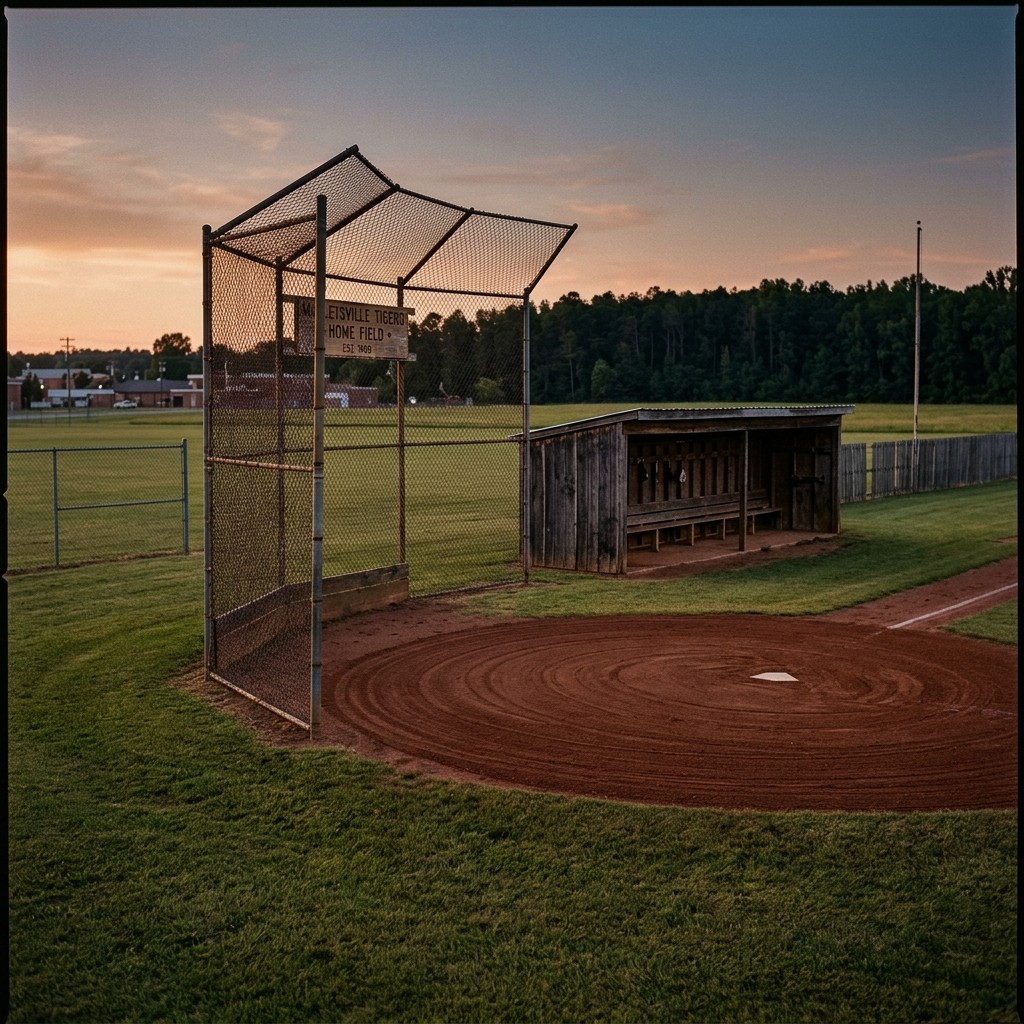
Coaching and teaching aren’t that different.
You walk into a season, or a school year, with a plan, a roster, and a belief in what things are supposed to look like.
And then reality shows up.
Sometimes it shows up in the form of a kid like Randy White.
If you had told me at the start of the 2000 baseball season that we’d win a state championship with a team of undersized underdogs and a right fielder who thought a pop-up was a strategic play, I would’ve laughed you straight off the field.
But then Randy White walked into my life.
”Coach, I Want to Play Baseball”
Randy had just moved in from Utah. He was a polite, yes-sir, no-sir kind of kid who had just helped us make a surprise run to second place in basketball. Great teammate. Smart. Gritty.
But baseball? That wasn’t his sport. Or so I thought.
One day after hoops season, he came up to me and said, “Coach, I want to play baseball.”
I looked at him. “Randy, our baseball program is no joke. We take it seriously around here. This isn’t church league softball. Have you even played baseball?”
He smiled. “Not really. But I just want to be a part of the team. I don’t care if I play a single inning.”
I’d heard that line before. From at least fifty kids. And half of them wanted to be All-State by May.
But Randy meant it.
And honestly, we only had thirteen guys show up that spring. I figured if he could wear a uniform without tripping over his cleats, we’d take him.
The first few weeks?
Woof.
Randy couldn’t hit a beach ball if you rolled it to him. His swing looked like a guy swatting flies. He caught fly balls like someone reaching for a balloon at a birthday party. No two hands, no form, just pure chaos and effort.
He led the team in strikeouts. Might’ve led the state. Possibly set a national record somewhere between heroic and historically bad.
And then the season changed.
Not because of a win.
Because of a decision.
We Chose Culture Over Talent
We dismissed our two best players from the team.
Best talent? No question.
Worst attitudes? Also no question.
In that moment, one of the hardest decisions you make as a coach or a teacher, we chose culture over talent.
Just like that, we were down to eleven players.
Eleven.
And one of them was Randy White.

Out of necessity, Randy got the nod in right field.
His glove looked like it had been sitting in a closet since the ’70s, buried under a stack of boxes. He had struck out ten of his first eleven at-bats.
And then something happened.
I don’t know how. I don’t know why.
Maybe it was divine intervention. Maybe he stopped thinking. Maybe the ball just started feeling bad for him.
But he started hitting.
In the district tournament, Randy drove in six runs.
Six.
That was about five more than he had all season.
We made a run. Not because we were big. Not because we were loaded with talent.
Our starting infield probably wouldn’t have qualified for most of the rides at Six Flags.
But something had shifted.
We had grit. We had buy-in. We had a group that just kept playing.
We won the district championship and headed to state.
A point I should mention here: halfway through the season, I had already told my wife to go ahead and head to California to visit family. There was no way we were making the state tournament.
Wrong.
”Coach, Do You Want Me to Hit a Pop-Up?”
Then came the moment that told me everything I needed to know about Randy White.
First game of the state tournament. Bases loaded. Randy steps in.
He calls time, walks down the line, and asks me, completely serious:
“Coach, do you want me to hit a pop-up?”
I blinked.
“What?”
“You want a pop-up?”
“Do you mean a fly ball?”
“Oh yeah. A fly ball.”
I just stared at him for a second.
“Randy, just hit the ball.”
He jogs back to the box like that’s a totally normal conversation to have in the middle of a state tournament game.
And I’m standing there thinking, we are in way over our heads.

Next night. Semifinals.
We’re facing the best team in the state. 26-1. Future MLB draft pick on the mound.
We’re 8-13.
Fifth inning. 0-0. Bases loaded. Two outs.
Guess who’s up?
Randy White.
I call him down.
“Randy, he’s going to throw you a ninety mile an hour fastball. Don’t even think. Just swing.”
He nods and walks up like he’s on a mission.
First pitch. Bam.
Line drive down the right field line.
Three runs.
We win.
Pandemonium.
He Never Knew the Signs
Next day. State championship.
Bases loaded. Again.
3-0 count.
I give him the take sign.
He swings.
Long fly ball. Sac fly. Another RBI.
I’m losing it in the dugout.
I turn to my assistant, Shaun Walker, and say, “Go ask him why he swung.”
Shaun comes back laughing.
“Coach, he says he doesn’t know the signs. Never has. Just plays.”
Of course he does.
And somewhere in the middle of all that, I realized something I’ve seen play out in classrooms, locker rooms, and business environments for thirty-five years.
We spend a lot of time trying to control every move kids make. Every signal, every step, every decision.
Sometimes the best thing we can do is build an environment where they can just play. Where they can fail, adjust, and grow without overthinking every signal coming from the sideline.
Randy didn’t know the signs.
Never had.
Still doesn’t, if I’m being honest.
But he knew how to compete.
He knew how to show up.
And in the end, that mattered more than anything I could’ve signaled from the third base box.
Where Winning Actually Begins
We didn’t win that state title in May.
We won it in March, when the coaches and administrators chose culture over talent.
From that point on, everything changed.
We had eleven players.
An undersized group that didn’t look the part.
And one right fielder who didn’t know the signs.
But we had something better.
We had a culture that let kids keep playing.
If you’re working to build a stronger culture in your school, program, or leadership team, Matt shares short stories and practical lessons like this one every week. Subscribe to the newsletter and they’ll land straight in your inbox.